
A leaking roof puts a homeowner in an uncomfortable position. The instinct is to call a Wichita roofing contractor, get the damaged section patched, and move on. In many cases, that is exactly the right call. In others, patching a failing roof section delays a larger failure by months, not years, and the homeowner ends up paying twice: once for the repair and once for the replacement that follows.
Knowing which situation you are in before the contractor arrives gives you better footing in that conversation. This article covers the structural signals that point toward repair, the signals that point toward replacement, and the questions worth asking a licensed roofing contractor before you authorize any scope of work.
How a Roof Fails: The Two Distinct Patterns
Roof failure follows two recognizable patterns, and the pattern tells you a great deal about what the right response is.
Localized damage is what it sounds like: a specific section of the roof has failed while the rest of the system remains sound. A storm tears off a row of shingles along the ridge. A flashing seal around a chimney separates and lets water in at a single point. A branch punctures a three-foot section of decking. The roof as a whole is structurally intact; the problem is contained.
System-wide degradation is different. The shingles across most of the roof surface have lost their granule coating. The decking underneath has absorbed moisture in multiple spots. Flashings are corroding across several penetration points. The underlayment, which sits between the shingles and the decking, has thinned past its functional life. No single repair addresses system-wide degradation because the system itself has reached the end of its service period.
The distinction between these two patterns is the single most important judgment a roofing contractor makes during an inspection. When a contractor recommends replacement on a roof that has localized damage, ask them to show you why the rest of the system does not qualify for repair. When they recommend repair on a roof showing system-wide degradation, ask them how long the repair is expected to hold and what they expect to happen next.
Physical Signs That Point Toward Repair
A licensed roofing contractor will inspect the following areas. These findings typically indicate that repair is the appropriate scope:
Isolated shingle loss.: A storm strips shingles from one section of the roof. The surrounding field is intact, the decking below the affected section shows no saturation, and the remaining shingles still hold granules. Replacing the lost shingles and re-sealing the area is a proportionate response.
Single-point flashing failure: Water enters around one chimney, skylight, vent pipe, or wall transition. The flashing has separated or corroded at that joint. The rest of the roof surface and the surrounding decking are dry. Re-flashing the affected penetration stops the leak.
A contained puncture or impact zone: Physical impact from a branch, hail concentration, or foot traffic damages a defined area. The contractor can cut out the damaged section, sister in new decking where needed, and reshingle the patch without disturbing the surrounding field.
In all three cases, the repair contains the damage and the remaining roof has serviceable life ahead of it.
Physical Signs That Point Toward Replacement
These findings indicate that the system has degraded past the point where repair delivers lasting value:
Widespread granule loss: Asphalt shingles shed granules as they age. When the granule coating is thin or absent across most of the roof, the shingles have lost their UV protection and water-shedding capacity. Patching isolated sections does not address a field of degraded shingles.
Saturated or softened decking in multiple locations: During an inspection, a contractor will press against the decking to check for softness and probe with a moisture meter in multiple spots. Multiple saturated zones indicate that water has been entering at more than one point over time. Replacing only the entry points leaves compromised structural material underneath any new shingles.
Shingles that cup, curl, or crack across the roof field: Cupping occurs when shingle edges curl upward. Curling at the corners (called “clawing”) signals adhesive failure. Cracking across the tab surface indicates brittleness from age or thermal cycling. When these patterns appear across most of the field, the shingles are past their rated life.
Repeated repairs on the same sections: A roof that has been patched in the same locations two or three times is telling you something about the underlying condition. When the same areas keep failing, the issue is usually below the shingle layer: the underlayment has failed, the decking has weakened, or the flashing system is incompatible with the structure.
Age relative to rated service life: Most three-tab shingles carry a rated life of 20 to 25 years; architectural shingles typically rate at 25 to 30 years. A roof approaching or past its rated service life, showing any of the above signs, is a replacement candidate even if a repair could technically be made. A contractor who recommends a major repair on a 28-year-old three-tab system should explain the expected return on that investment.
The Inspection Comes Before the Decision
Neither repair nor replacement is the right answer in the abstract. The right answer depends on what the inspection reveals, and a thorough inspection takes time.
A licensed roofing contractor will walk the roof surface, inspect the decking through attic access where it is available, check flashings at every penetration point, examine the ridge cap, note the condition of gutters and fascia, and document what they find. Some contractors use moisture meters to test decking saturation beneath the shingle field.
Ask for a written inspection report before you authorize any work. The report should describe what was found in each area, not just what the contractor recommends. That documentation gives you a clear basis for comparing estimates if you get more than one, and it protects you if a dispute arises later.
Questions worth asking before you sign:
- What is the condition of the decking beneath the damaged section?
- If you repair this area, what is the realistic lifespan of the repair?
- What are the signs that would indicate a second repair is not warranted?
- Does the rest of the roof surface warrant attention in the next one to three years?
- What materials do you recommend for replacement, and why?
A contractor who answers these questions clearly and in writing is demonstrating the kind of accountability that matters in a trade where the work is out of sight once the job is done.
What Replacement Actually Covers
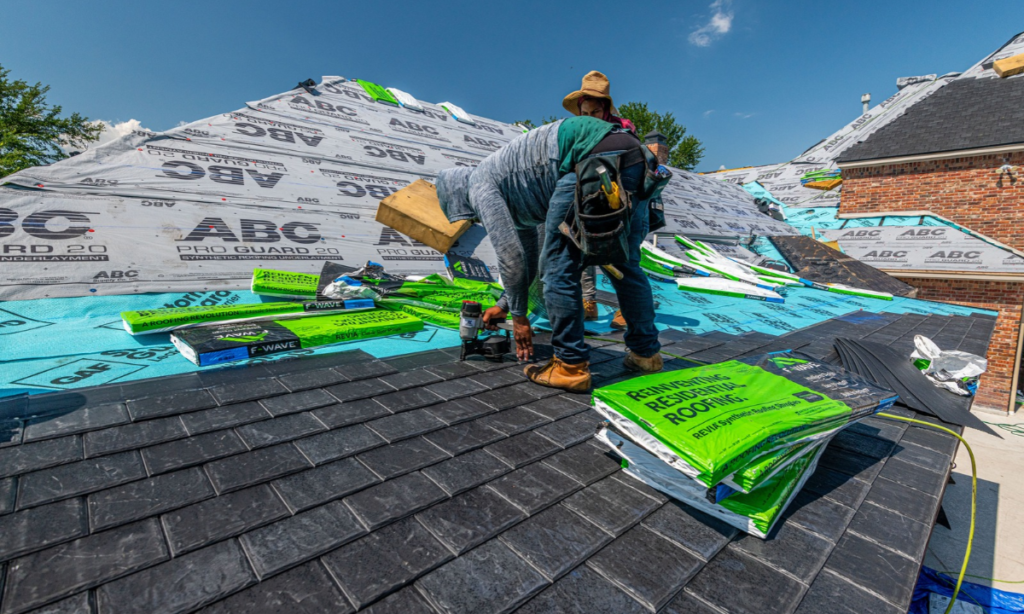
Full roof replacement is not simply “new shingles on top of old ones.” A properly executed replacement includes removing the existing shingle field, inspecting and repairing the decking, installing new underlayment, re-flashing all penetration points, and installing new shingles from the eave to the ridge. The ridge cap is replaced as part of the system.
When a contractor proposes installing new shingles directly over an existing layer (called a “re-roof” or “overlay”), ask why. An overlay leaves the old material in place, which means any moisture or decay underneath stays trapped. Most roofing manufacturers will not honor warranty terms on shingles installed over an existing layer.
For property owners in Wichita and the surrounding south-central Kansas area, Apple Roofing provides residential and commercial roofing services, including roof inspections, repairs, and replacements. Serving Wichita, Derby, Newton, Andover, Haysville, and nearby communities, Apple Roofing helps homeowners and businesses assess their roofing needs and determine appropriate solutions.
View Your Top-Rated Roofing Partner in Wichita in a full screen map
Media Contact:
Company Name: Apple Roofing
Phone: (316) 799-3435
Address: 801 E Douglas Ave 2nd Floor
City: Wichita
State: KS
ZIP Code: 67202
Country: United States
Website: https://appleroof.com/wichita-ks/
Social Media:
https://www.facebook.com/appleroofing
https://www.linkedin.com/company/apple-roofing-llc/
https://www.youtube.com/channel/UCMNRXjzM6GKfNh7hX8rRRfQ
https://www.instagram.com/appleroofing/