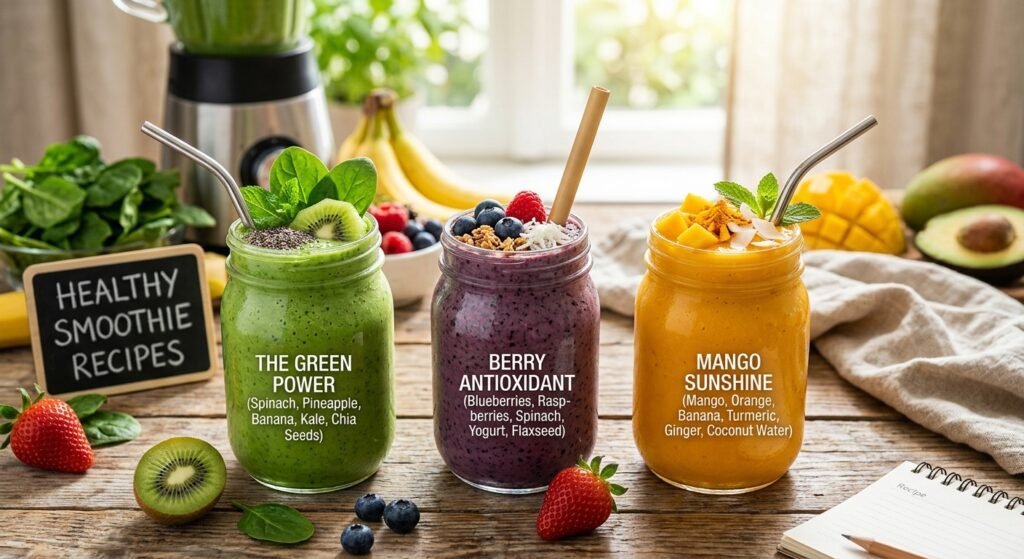

Smoothies are a convenient way to combine fruits, vegetables, yogurt, milk, oats, seeds, and other whole-food ingredients in one drink. When most or all of the edible fruit or vegetable is blended, much of its fiber and nutrients remain. Harvard T.H. Chan School of Public Health notes that smoothies made from whole produce can retain fiber, although eating whole fruits and vegetables may provide greater satiety.
The ingredients matter more than the word “smoothie.” A drink made mainly from whole fruit, vegetables, plain yogurt, and an unsweetened liquid is very different from one containing large amounts of fruit juice, sweetened yogurt, syrup, or added sugar.
This guide to Healthy smoothie recipes explains how to create balanced combinations and provides 15 easy recipes. You will also learn how to choose ingredients, make smoothies more filling, reduce added sugar, use fresh or frozen produce, prepare ingredients ahead of time, and adapt recipes to different dietary preferences.
What Makes a Smoothie Healthy?
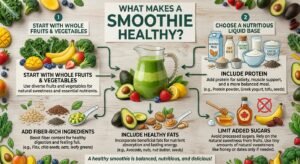
A smoothie is not automatically healthy simply because it contains fruit. Its nutritional value depends on the ingredients, quantities, preparation method, and how it fits into your overall eating pattern. The American Heart Association’s 2026 dietary guidance emphasizes dietary patterns built around vegetables and fruits, whole grains, healthy protein sources, unsaturated fats, minimally processed foods, and limited added sugars.
Start With Whole Fruits and Vegetables
Whole fruits and vegetables are excellent foundations for smoothies. Bananas, strawberries, blueberries, raspberries, mangoes, peaches, apples, pineapple, spinach, kale, and cucumber can all work well.
Blending whole produce keeps much of the edible plant material in the drink. This is different from juicing, where much of the pulp and fiber may be removed. Harvard recommends whole fruits and vegetables as the preferred foundation and notes that smoothies made without additional sweeteners can be a useful way for some people to consume more produce.
For Healthy smoothie recipes, use whole produce whenever possible and avoid making fruit juice the main ingredient.
Choose a Nutritious Liquid Base
Water is the simplest liquid base and does not add sugar or significant calories. Milk can provide protein and other nutrients, while unsweetened soy or other plant-based beverages can provide different nutritional benefits depending on the product.
Always check the nutrition label on packaged plant-based beverages because their protein, sugar, and calorie content can vary.
Include Protein
Protein can make a smoothie more substantial. Greek yogurt, plain yogurt, milk, soy milk, cottage cheese, nuts, seeds, and nut butters can contribute protein.
Not every smoothie needs a large amount of protein. A small fruit smoothie used as a snack has different requirements from a smoothie intended to be part of breakfast.
Add Fiber-Rich Ingredients
Healthy Smoothie Recipes fruit and vegetables naturally provide fiber. Oats, chia seeds, flaxseeds, berries, apples, and leafy greens can provide additional fiber.
Fiber is important as part of a balanced diet, and Mayo Clinic recommends a variety of plant foods, including fruits, vegetables, whole grains, nuts, and seeds, as sources of dietary fiber.
Include Healthy Fats
Avocado, nuts, seeds, and nut butters can add unsaturated fats and a creamy texture. These ingredients can be especially useful when a smoothie is intended to be more substantial.
Because nuts, seeds, nut butter, and avocado can be energy-dense, moderate portions are usually sufficient.
Limit Added Sugars
Fruit contains naturally occurring sugar. Added sugar is different and can come from honey, syrups, sugar, sweetened yogurt, and sweetened beverages.
The American Heart Association’s 2026 guidance recommends minimizing added sugars in foods and beverages. Therefore, Healthy smoothie recipes should generally allow whole fruit to provide most of the sweetness instead of relying on additional sweeteners.
How to Build a Balanced Smoothie
Creating a smoothie does not require a complicated formula. Start with a liquid, add fruit or vegetables, choose a protein source when useful, and then consider fiber and healthy fats.
Choose Your Liquid Base
Begin with water, milk, or an unsweetened plant-based beverage. Add liquid gradually so you can control the final consistency.
If you use frozen fruit, you may need slightly more liquid than you would with fresh fruit.
Add Fruits
Choose one or two main fruits. Banana creates sweetness and creaminess, berries provide a bright flavor, while mango and pineapple create tropical combinations.
Frozen fruit is particularly useful when you want a thick, cold smoothie.
Add Vegetables or Leafy Greens
Spinach and kale are common choices. Cucumber has a mild flavor and can work well in refreshing recipes.
Mayo Clinic’s green smoothie combines banana, strawberries, berries, spinach, lemon, mint, and water, showing how leafy greens can be paired with fruit. [4]
Add a Protein Source
Plain Greek yogurt, regular yogurt, milk, soy milk, cottage cheese, or a small amount of nut butter can increase the protein content.
For Healthy smoothie recipes designed for breakfast, a protein-containing ingredient can make the drink more substantial.
Add Fiber and Healthy Fats
Oats, chia seeds, flaxseeds, avocado, nuts, and nut butter can be useful additions. You do not need to use all of them in one recipe.
A simple combination of fruit, yogurt, oats, and seeds can often provide plenty of texture and nutritional variety without making the recipe complicated.
15 Healthy Smoothie Recipes to Try
The following recipes are practical home combinations based on established ingredient patterns used in recipes from Mayo Clinic and the American Heart Association. They are original recipe formulations rather than copied recipes. Nutritional values will vary depending on brands, ingredient sizes, and portions.
1. Strawberry Banana Smoothie
Ingredients:
- 1 medium banana
- 1 cup strawberries
- ¾ cup plain yogurt
- ½ cup milk
Method: Blend everything until smooth. Add a small amount of water if needed.
2. Blueberry Yogurt Smoothie
Ingredients:
- 1 cup blueberries
- ¾ cup plain Greek yogurt
- ½ cup unsweetened milk
- 1 tablespoon chia seeds
Method: Blend until creamy and serve immediately.
3. Mixed Berry Smoothie
Ingredients:
- ½ cup strawberries
- ½ cup blueberries
- ½ cup raspberries
- ¾ cup plain yogurt
- ½ cup milk
Method: Blend until smooth. Frozen berries can be used for a colder texture.
4. Green Spinach Smoothie
Ingredients:
- 1 banana
- ½ cup strawberries
- ½ cup blueberries
- 1–2 cups baby spinach
- 1 cup cold water
Method: Blend until smooth. This combination is inspired by the fruit-and-spinach approach used in Mayo Clinic’s green smoothie.
5. Mango Yogurt Smoothie
Ingredients:
- 1 cup mango
- ¾ cup plain yogurt
- ½ cup unsweetened milk
- Ice if desired
Method: Blend until creamy. Frozen mango works especially well for texture.
6. Pineapple Spinach Smoothie
Ingredients:
- 1 cup pineapple
- 1 cup spinach
- ½ banana
- ¾ cup cold water
Method: Blend thoroughly and add ice if preferred.
7. Banana Oat Smoothie
Ingredients:
- 1 banana
- ½ cup rolled oats
- ¾ cup Greek yogurt
- ¾ cup milk
- A small pinch of cinnamon
Method: Blend until the oats are fully incorporated.
8. Peach Strawberry Smoothie
Ingredients:
- 1 cup sliced peaches
- ½ cup strawberries
- ¾ cup plain yogurt
- ½ cup milk
Method: Blend until smooth. Fresh or unsweetened frozen fruit can be used.
9. Peanut Butter Banana Smoothie
Ingredients:
- 1 banana
- 1 tablespoon peanut butter
- ¾ cup milk
- ½ cup plain yogurt
Method: Blend until creamy. Keep the peanut butter portion moderate because nut butter is energy-dense.
10. Tropical Fruit Smoothie
Ingredients:
- ½ cup mango
- ½ cup pineapple
- ½ banana
- ¾ cup plain yogurt
- ½ cup milk
Method: Blend until smooth.
The American Heart Association also publishes Healthy Smoothie Recipes using tropical fruits such as mango and pineapple.
11. Apple Cinnamon Smoothie
Ingredients:
- 1 small apple
- ¾ cup plain yogurt
- ½ cup milk
- ¼ cup rolled oats
- Cinnamon to taste
Method: Remove the apple core, chop the apple, and blend all ingredients until smooth.
12. Avocado Green Smoothie
Ingredients:
- ½ avocado
- 1 cup spinach
- ½ banana
- ¾ cup unsweetened soy milk
- ½ cup water
Method: Blend until creamy.
Mayo Clinic Diet’s plant-powered smoothie combines soy milk, kale, spinach, cucumber, Greek yogurt, avocado, mint, and water.
13. Strawberry Oat Smoothie
Ingredients:
- 1 cup strawberries
- ½ cup rolled oats
- ¾ cup plain yogurt
- ½ cup milk
Method: Blend until smooth and creamy.
14. Blueberry Mango Smoothie
Ingredients:
- ½ cup blueberries
- ½ cup mango
- ¾ cup Greek yogurt
- ¾ cup milk
Method: Blend until creamy. Frozen fruit can be used for a thicker texture.
15. Plant-Powered Green Smoothie
Ingredients:
- 1 cup unsweetened soy milk
- 1 cup kale
- 1 cup baby spinach
- 1 small cucumber
- 6 ounces plain Greek yogurt
- 4 tablespoons avocado
- 1 tablespoon fresh mint
- ½ cup water
Method: Blend until smooth.
This recipe is closely adapted from Mayo Clinic Diet’s published plant-powered smoothie, which combines these types of green vegetables, soy milk, Greek yogurt, avocado, and mint. The published recipe provides 27.8 grams of protein and 6.9 grams of fiber per serving.
Best Ingredients for Healthy Smoothie Recipes
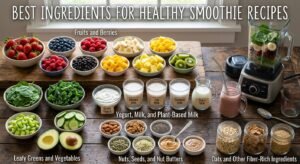
Choosing simple, minimally processed ingredients makes it easier to control sugar, portions, and overall nutritional quality.
Fruits and Berries
Bananas, berries, mangoes, peaches, apples, and pineapple offer different flavors and textures.
Fresh and frozen produce can both be useful. When buying packaged frozen or canned produce, Harvard recommends checking for unnecessary added sugar, sodium, or other additives.
Leafy Greens and Vegetables
Spinach and kale are convenient green ingredients. Cucumber works particularly well when you want a lighter flavor.
Combining vegetables with fruit can make green smoothies more approachable for people who are new to them.
Yogurt, Milk, and Plant-Based Milk
Plain yogurt and Greek yogurt can provide protein and creaminess. Milk and soy milk can also contribute protein.
Choose unsweetened products when possible if you want greater control over added sugar.
Nuts, Seeds, and Nut Butters
Chia, flax, almonds, walnuts, and peanut butter can contribute protein, fiber, and unsaturated fats. Use reasonable portions because these foods are concentrated sources of energy.
Oats and Other Fiber-Rich Ingredients
Rolled oats can make a smoothie thicker and provide whole-grain carbohydrates and fiber. Fruits, vegetables, seeds, and whole grains are useful sources of dietary fiber.
How to Make a Smoothie More Filling
A smoothie becomes more substantial when its ingredients are selected according to its purpose.
Add Protein
Greek yogurt, plain yogurt, milk, soy milk, cottage cheese, and nut or seed ingredients can provide protein.
Include Fiber
Whole fruit, vegetables, oats, chia, and flax can increase fiber. Healthy smoothie recipes containing several whole-food sources can provide more nutritional variety than fruit juice-based drinks.
Add Healthy Fats
Avocado, seeds, nuts, and nut butter can contribute unsaturated fats and improve texture.
Consider Whether It Is a Snack or Meal
A smaller smoothie may work well as a snack. A smoothie intended to replace breakfast needs a more substantial combination of ingredients.
Mayo Clinic notes that a smoothie can serve as a meal replacement when it is appropriately balanced and actually replaces a meal rather than simply being added on top of one.
Healthy Smoothies for Different Times of Day
There is no universal smoothie that everyone needs at a particular time. Choose ingredients based on your appetite and what the smoothie is replacing or accompanying.
Smoothies for Breakfast
Breakfast smoothies can combine fruit with yogurt, oats, milk, seeds, or nut butter. For Healthy smoothie recipes used for breakfast, consider including protein and fiber so the smoothie is more substantial.
Smoothies for a Quick Snack
A smaller fruit-and-yogurt smoothie can be a convenient snack. Keep the portion appropriate for your overall daily intake.
Smoothies After Exercise
After exercise, foods containing carbohydrate and protein may be useful depending on the activity and your individual needs.
A smoothie containing fruit and a protein-containing ingredient can be one convenient option.
Smoothies for Busy Mornings
Prepare ingredients in advance and keep frozen fruit available. This can reduce preparation time while still allowing you to make a fresh smoothie.
Fresh vs. Frozen Ingredients for Smoothies
Both fresh and frozen produce can work well in Healthy smoothie recipes.
When to Use Fresh Fruit
Fresh fruit is useful when it is ripe, available, and convenient. Wash fresh produce properly before preparation.
Benefits of Frozen Fruit
Frozen fruit can make smoothies colder and thicker and can be convenient when fresh produce is out of season.
Choosing Unsweetened Frozen Ingredients
Check the package label. Plain frozen fruit without added sugar gives you more control over the finished smoothie.
How Frozen Ingredients Affect Texture
Frozen bananas, mangoes, berries, and peaches can create a thick texture without requiring large amounts of ice.
How to Reduce Added Sugar in Smoothies
Added sugar is one of the easiest things to control when making smoothies at home.
Let Whole Fruit Provide Sweetness
Ripe bananas, mangoes, pineapple, and berries can provide plenty of natural sweetness.
Choose Unsweetened Yogurt and Milk Alternatives
Plain yogurt and unsweetened beverages allow you to control the amount of added sugar.
Be Careful With Fruit Juice
Juice contains less fiber than whole fruit and can make it easier to consume a concentrated amount of sugar. Harvard recommends whole fruits and vegetables and notes that juices can be easy to over-consume.
Use Sweeteners Sparingly
Honey, maple syrup, and other sweeteners are still added sugars. Try adjusting the fruit combination before adding sweeteners.
For Healthy smoothie recipes, whole fruit should usually provide most of the sweetness.
Common Mistakes to Avoid When Making Smoothies
Using Too Much Fruit Juice
Using large amounts of juice can increase sweetness while reducing the role of whole-food ingredients.
Adding Too Much Added Sugar
Sweetened yogurt, syrups, sugar, and sweetened beverages can increase added sugar unnecessarily.
Forgetting Protein and Fiber
A fruit-only smoothie may be less substantial than one containing yogurt, oats, seeds, or other suitable ingredients.
Adding Too Many Calorie-Dense Ingredients
Large amounts of nut butter, avocado, oats, seeds, and full-fat dairy can make a smoothie much more energy-dense.
Making Portions Too Large
Healthy ingredients still contribute energy. Portion size should match whether the smoothie is a snack or meal.
Assuming Every Smoothie Is a Complete Meal
Not every smoothie contains enough variety or quantity to replace a meal. Healthy smoothie recipes should be matched to their intended purpose.
Read more: Famous Places in Mexico: 40 Top Tourist Destinations to Visit
Tips for Preparing Healthy Smoothies Ahead of Time
Prepare Fruits and Vegetables in Advance
Wash and portion appropriate produce before storing it safely.
Make Freezer Smoothie Packs
Place measured fruit and vegetables into freezer-safe portions. Add liquid and other ingredients when you are ready to blend.
Keep Frozen Ingredients Ready
Frozen berries, mango, pineapple, and banana can save preparation time.
Store Prepared Smoothies Properly
If you make a smoothie ahead of time, refrigerate it in a covered container and follow appropriate food-safety practices. Mayo Clinic also notes that some smoothie ingredients can be prepared ahead and refrigerated before blending.
How to Customize Healthy Smoothie Recipes
Make Your Smoothie Dairy-Free
Use an unsweetened plant-based beverage and a suitable dairy-free yogurt if desired.
Make It Thicker or Thinner
Use frozen fruit, yogurt, oats, or avocado for a thicker texture. Add liquid gradually for a thinner smoothie.
Adjust the Flavor Naturally
Cinnamon, ginger, lemon, lime, and mint can add flavor without requiring additional sugar.
Substitute Seasonal Ingredients
Swap fruits according to availability. For example, one type of berry can often replace another.
Adapt Recipes to Your Dietary Preferences
Change dairy ingredients, nuts, seeds, or other components according to your dietary needs. If you have a food allergy or medically prescribed diet, check ingredients carefully.
Final Thoughts
The best healthy smoothie recipes are not necessarily the most complicated. A practical smoothie can start with whole fruit or vegetables, an appropriate liquid, and one or two ingredients that provide protein, fiber, or unsaturated fats when needed.
Fresh and frozen produce can both work, while plain yogurt and unsweetened beverages make it easier to control added sugar. Portion size also matters, especially when using concentrated ingredients such as nut butter, seeds, oats, or avocado. With simple ingredients and sensible portions, homemade smoothies can be a convenient part of everyday eating.
FAQs About Healthy Smoothie Recipes
What Makes a Smoothie Healthy?
A well-planned smoothie can combine whole fruits or vegetables with a suitable liquid and, when appropriate, protein, fiber-rich foods, and unsaturated fats while keeping added sugar low.
Are Homemade Smoothies Healthy?
They can be. Homemade smoothies give you better control over ingredients, portions, sweetness, and preparation.
Can You Drink a Smoothie Every Day?
A smoothie can fit into a varied diet, but drinking one every day is not necessary. Variety and overall diet quality are more important than relying on one particular food or beverage.
What Can I Add to a Smoothie to Make It More Filling?
Try Greek yogurt, plain yogurt, oats, chia seeds, flaxseeds, milk, soy milk, or a moderate amount of nut butter.
Is Fresh or Frozen Fruit Better?
Neither is automatically better. Both can be nutritious choices. Frozen fruit can be particularly convenient and can improve smoothie texture.