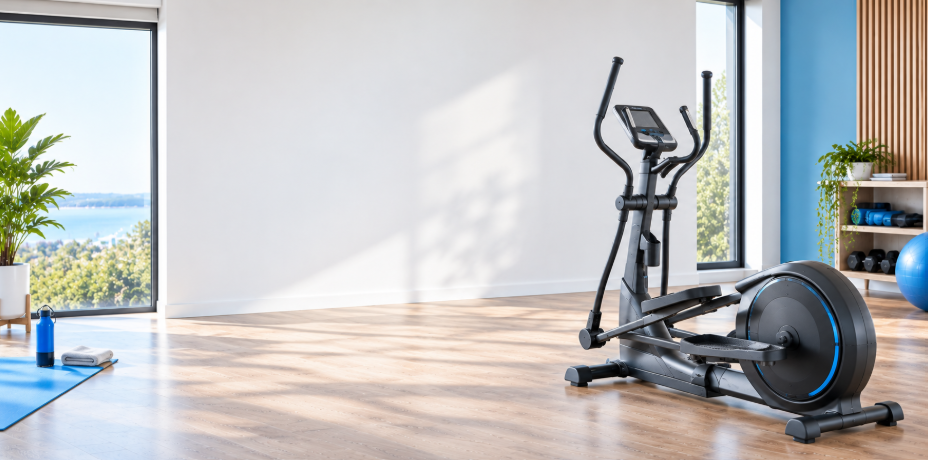

If you are chasing a cardio solution that is affordable, customizable, and easy to commit to, then you should give the cross trainer serious consideration. For good reason, it’s one of the best-recognized pieces of fitness equipment recommended. All fitness levels can use and benefit from the machine; no particular skills are needed in order to get started, and the resistance settings can be adjusted to fit everything from a light recovery session to a rigorous aerobic workout. It tells you what the research actually says on using a cross trainer with regularity, explains how the machine works, and how to make it work its way into a routine that is sensible long term.
How Does a Cross Trainer Work?
A cross trainer, also called an elliptical trainer, uses a linked pedal and handlebar system to guide the user through an oval, gliding movement that simulates a combination of walking, running, and stair climbing. Both feet remain in contact with the pedals throughout, which means the movement is continuous rather than impact-based. Most cross trainer for sale machines offer adjustable resistance levels & some include an adjustable incline, which changes the angle of the pedal stroke and the muscle groups most involved. The moving handles engage the arms and upper body when pushed and pulled, adding a second layer of muscular demand to what would otherwise be a lower-body-only exercise. Together, these features make it a versatile aerobic machine that can be customized to intensity, duration, as well as training focus in a way that few other pieces of cardio equipment can match at a similar price point.
10 Key Benefits of Adding Cross Trainer Workouts to Your Routine
These benefits draw from the wider research on regular aerobic exercise, with specific attention to what cross trainers use contributes. Worth noting upfront: a machine alone doesn’t produce any of this. Consistency, effort level, and the rest of your lifestyle all factor in, but the evidence for what regular cardio does for the body is genuinely strong.
Improves Cardiovascular Fitness
Aerobic exercise pushes the heart as well as lungs to work harder than at rest. Then repeated demand leads over time to objective improvements in cardiorespiratory fitness. Regular cross trainer workouts are based around 1 principle: regular, sustained exercise at moderate to vigorous intensity progressively trains your body how to better deliver and utilize oxygen.
Helps Increase Daily Calorie Expenditure
Do a cross trainer session to help improve total daily energy expenditure alongside what you already do. The amount of calories any individual burns depends on a number of factors including the body size, intensity, duration of the workout, and the individual’s own metabolic factors. Therefore, having one calorie figure for a session isn’t particularly useful. Regular moderate-to-vigorous aerobic exercise significantly raises total energy expenditure when done consistently.
Supports Weight Management
Exercise, including regular cardio, can contribute to the energy deficit that supports weight management. The key distinction is that it works alongside nutrition and overall daily activity, one part of the equation rather than the whole thing. Combining regular aerobic exercise with appropriate nutrition produces better long-term outcomes than either approach alone.
Provides a Lower-Impact Cardio Option
A cross trainer fitness equipment Melbourne prevents the repeated impact of running or jumping on the ground since both feet stay on the pedals the whole time. For those who are uncomfortable with high-impact activities, whether it’s due to joints, recovering from injury or simply preference, it provides an opportunity to keep aerobic effort going with less mechanical stress. When something says ‘lower impact’, it does not mean no impact or automatically suitable for every joint condition. If you are managing an injury, it is a good idea to check with a health professional first.
Works Both the Upper and Lower Body
The legs do most of the work; driving the pedals engages the quads, hamstrings, glutes, and calves. When you actively push and pull the moving handles, the arms, shoulders, and upper back contribute meaningfully too. How much each area is involved depends on technique and resistance: pushing and pulling with intention adds real demand, while passive hand placement reduces it significantly.
Can Improve Muscular Endurance
Muscular endurance responds to sustained, rhythmic exercise like cross trainer training. The legs, hips, and upper body work continuously through a session, and that sustained demand gradually improves how long those muscles can work before fatigue sets in. This is distinct from maximum strength, which requires progressive resistance training to develop.
Can Support Blood Sugar and Metabolic Health
Regular aerobic exercise is well-established in the research as a positive contributor to metabolic health. Improved insulin sensitivity and better glucose regulation are among the outcomes associated with consistent moderate-intensity cardio, as working muscles take up glucose from the bloodstream more efficiently during exercise. This reflects a contribution to overall lifestyle health, not a treatment or management approach for any specific metabolic condition.
Supports Mental Well-Being
Regular exercise and psychological health are one of the most important conclusions in the area of sports science. Regular practice of aerobic exercises relates to lower stress, better mood, and lesser symptoms in people with mild anxiety or depression. One training session on a cross trainer can be moderate in intensity and length but still lead to positive psychological effects.
Can Support Better Sleep
Regular physical activity has been linked with better sleep quality. The pattern of the relationship between sleep and cross trainer use is similar. The timing and intensity matter individually; people differ. For instance, some people find vigorous exercise close to bedtime affects their ability to wind down, while others do not. Most evidence suggests that regular moderate-level aerobic exercise during the week tends to enhance sleep quality.
Makes Consistent Aerobic Exercise Easier
Consistency determines whether any exercise habit produces results, and a cross trainer removes several practical barriers. It’s indoors and weather-independent, available at any hour, immediately adjustable in intensity, and a 20-minute session takes far less time than a gym commute.
Does Using a Cross Trainer Every Day Make Sense?
Utilizing a cross trainer each day at light to moderate intensity, such as taking a low-impact workout for 20 minutes on a recovery day, is not the same as working hard day in and day out. Light movement aids in recovery as well as adds to the overall activity without the weariness that comes from performing strenuous activities. In order to give your body time to adjust between hard workouts, “daily use of cross trainer” is most effective when there is variation in intensity throughout the week instead of continually doing the same arduous workout daily.
Conclusion
A cross trainer earns its place in a home gym or commercial facility because it combines genuine cardiovascular benefit with accessibility, adjustability, and a lower-impact movement pattern that suits a wide range of users. The ten benefits covered here reflect what consistent aerobic exercise produces over time, not a single session, but a habit. If you’re looking to buy cardio equipment online or comparing a cross trainer for sale before committing, there is a range of cross trainers that covers options from entry-level to mid-range. The best elliptical trainer Australia buyers tend to recommend is whichever one they actually use, so picking one that fits your space, your budget, and your routine is the most important decision of all.