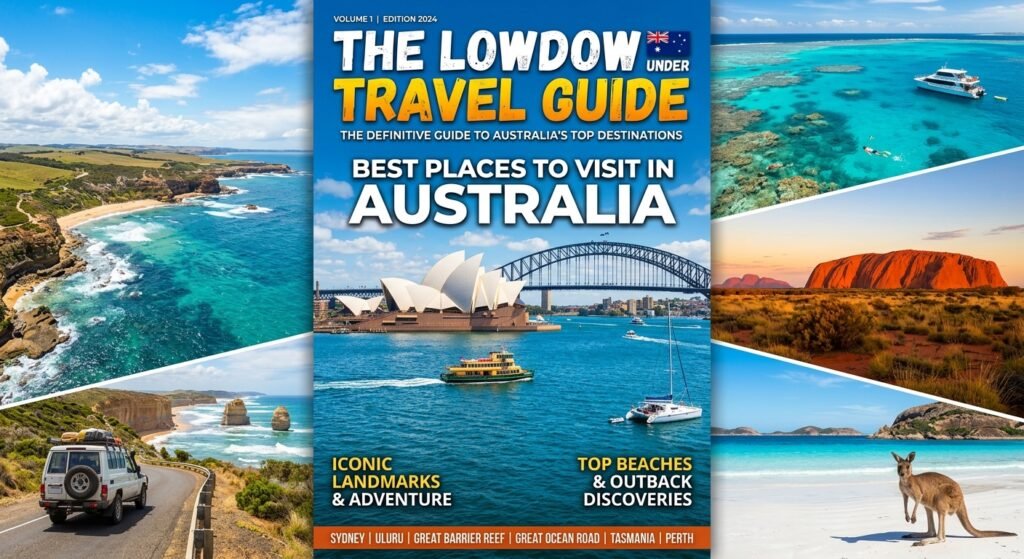

Australia is a destination where the experience can change dramatically from one region to another. A trip might begin with Sydney’s harbour and beaches, continue through Melbourne’s cultural attractions, move north toward tropical Queensland, or head south to Tasmania’s wilderness. The country’s geography and climate are so varied that choosing where to go is often the first major travel decision.
This thelowdownunder travel guide focuses on some of Australia’s most popular and distinctive destinations, along with natural attractions, activities, seasons, and practical planning advice. Rather than suggesting that one place is universally “the best,” the goal is to help travelers match destinations with their interests and available time.
Australia spans tropical, subtropical, temperate and desert environments. The Bureau of Meteorology notes that climate varies significantly across the country, which is why weather expectations should always be checked for the specific region you plan to visit.
What Makes Australia a Must-Visit Travel Destination?
Diverse Landscapes and Natural Wonders
Australia’s landscape is remarkably varied. Tropical environments occur in the north, temperate areas cover much of the south, and large parts of the interior are desert. The Bureau of Meteorology also identifies significant differences caused by geography, including mountains and distance from the coast.
That variety is one reason thelowdownunder travel can appeal to different types of travelers. Someone interested in coral reefs can head toward Queensland, while a traveler who prefers mountains and hiking might choose Tasmania or the Blue Mountains. Those interested in desert landscapes and Aboriginal culture may consider Uluṟu and the Red Centre.
Vibrant Cities and Coastal Experiences
Australia’s major cities offer very different experiences. Sydney combines harbour landmarks and beaches, Melbourne is known for laneways, food, art and sporting culture, Brisbane offers riverside experiences and access to nearby islands, and Perth combines beaches, parks and city attractions.
For thelowdownunder travel planning, this means a city holiday does not have to be limited to museums and buildings. Many Australian cities make it possible to combine urban attractions with beaches, parks, nature areas or nearby regional destinations.
Unique Wildlife and Outdoor Adventures
Wildlife and outdoor activities are another major part of Australia’s appeal. Tasmania offers opportunities to encounter animals such as wombats, wallabies and Tasmanian devils, while Rottnest Island near Perth is known for its quokkas. Tropical North Queensland offers reef and rainforest experiences, while national parks around the country provide walking and other outdoor opportunities.
A good thelowdownunder travel itinerary should therefore consider outdoor experiences alongside city sightseeing, particularly if nature or wildlife is one of your main interests.
Best Places to Visit in Australia
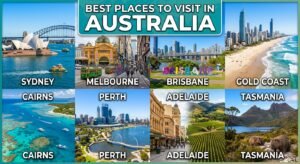
Sydney – Iconic Landmarks and Harbour Views
Sydney is one of Australia’s most recognizable destinations. Tourism Australia highlights the Sydney Opera House and Sydney Harbour Bridge as major landmarks, while Bondi and Manly are among the city’s well-known beaches. Visitors can also use ferries to explore Sydney Harbour and travel beyond the city toward the Blue Mountains.
Sydney is a strong option for first-time visitors who want several types of experiences in one destination. You can spend part of the trip exploring the harbour and city center and another part enjoying beaches or a nearby nature excursion.
For thelowdownunder travel planning, Sydney can work particularly well as an introduction to Australia because it combines famous landmarks, coastal scenery, cultural experiences and access to surrounding destinations.
Melbourne – Culture, Food, and City Life
Melbourne offers a distinctly urban experience. Tourism Australia highlights the city’s laneways, street art, cafés, dining, galleries, museums, theatres and sporting culture. The city is also a starting point for excursions to places such as the Great Ocean Road and Yarra Valley.
Melbourne is also situated in a temperate climate zone and can experience changing weather conditions. The Bureau of Meteorology identifies Melbourne as a temperate location with distinct seasonal variation.
For thelowdownunder travel visitors interested in food, art and city culture, Melbourne can be an excellent choice, particularly when combined with a regional Victoria road trip.
Brisbane – Riverside Attractions and Queensland Experiences
Brisbane provides a different Queensland experience, combining a subtropical city environment with the Brisbane River and access to nearby coastal and island destinations. Moreton Island, traditionally known as Mulgumpin, is one nearby option, with beaches, sand dunes, shipwrecks and Moreton National Park.
The Bureau of Meteorology classifies Brisbane as subtropical, with hot summers and mild winters. For thelowdownunder travel planning, Brisbane can be useful as both a city destination and a base for exploring parts of southeast Queensland.
Gold Coast – Beaches, Surfing, and Entertainment
The Gold Coast is best known for its beaches, but the destination offers considerably more than seaside relaxation. Tourism Australia highlights Surfers Paradise and Burleigh Heads, theme parks, coastal neighborhoods, dining, shopping and the subtropical hinterland.
The region’s hinterland provides a change of scenery, with waterfalls, mountain villages and walking opportunities. The Gold Coast also has a public transportation network that includes trains, buses, ferries and the G:link tram system.
For thelowdownunder travel itineraries that combine beaches with entertainment and outdoor activities, the Gold Coast is a practical option.
Cairns – Gateway to the Great Barrier Reef
Cairns is one of the country’s best-known bases for exploring Tropical North Queensland. Tourism Australia describes the region as a gateway to the Great Barrier Reef and the Wet Tropics rainforest, with Cairns itself offering markets, cafés and outdoor experiences.
The Great Barrier Reef is one of the world’s major marine ecosystems. The Great Barrier Reef Marine Park Authority describes it as the world’s largest coral reef ecosystem, extending along the Queensland coast for more than 2,300 kilometres.
For thelowdownunder travel readers who prioritize snorkeling, diving, reef tours or rainforest experiences, Cairns offers a particularly strong combination of attractions.
Perth – Beaches and Western Australian Adventures
Perth combines a modern city environment with beaches, parks and access to Western Australia’s distinctive destinations. Tourism Australia highlights Kings Park and Botanic Garden, Perth’s beaches, Fremantle and Rottnest Island among the region’s major experiences.
Rottnest Island is particularly known for its quokkas, while Fremantle provides historic streets, cultural attractions and a connection to Whadjuk Noongar heritage.
For thelowdownunder travel planning, Perth is best considered as part of a Western Australian itinerary rather than simply another stop on a rushed nationwide trip.
Adelaide – Food, Culture, and Nearby Wine Regions
Adelaide offers food, markets, cultural attractions, beaches and access to South Australia’s wine regions. Tourism Australia highlights Adelaide Central Market, the city’s festival culture, nearby beaches and wine areas such as the Barossa Valley and other regional destinations.
The city is also associated with Kaurna culture, and Tourism Australia highlights the Adelaide Kaurna walking trail as one way visitors can learn more about the traditional lands and history of the Kaurna people.
For thelowdownunder travel itineraries built around food, wine, culture and regional exploration, Adelaide provides a strong base.
Tasmania – Wilderness and Scenic Landscapes
Tasmania is a natural choice for travelers who want more wilderness and outdoor exploration. Tourism Australia highlights destinations including Freycinet and Cradle Mountain, along with wildlife, hiking, food, wine and scenic road trips.
Freycinet National Park, for example, is known for the Hazards mountain range, Wineglass Bay and coastal walking opportunities.
For thelowdownunder travel plans centered on hiking, wildlife and scenic landscapes, Tasmania can offer a very different experience from Australia’s mainland cities.
Australia’s Top Natural Attractions
Great Barrier Reef
The Great Barrier Reef is one of Australia’s most important natural attractions and a major reason travelers visit Tropical North Queensland. The Reef Authority states that the reef system extends more than 2,300 kilometres and includes thousands of individual reefs and hundreds of islands and coral cays.
Snorkeling, diving, sailing and reef tours are among the ways visitors can experience the marine environment. Because the reef is a protected ecosystem, travelers should follow the instructions of tour operators and park authorities and avoid damaging coral or disturbing marine life.
Uluṟu and Uluṟu-Kata Tjuṯa National Park
Uluṟu is both a major natural landmark and a place of deep cultural importance to Aṉangu Traditional Owners. Uluṟu-Kata Tjuṯa National Park is jointly managed with Aṉangu Traditional Owners and has World Heritage recognition for both natural and cultural values.
Visitors should follow park guidance and respect culturally sensitive locations. Parks Australia also publishes current information about track access, photography restrictions and temporary closures, which demonstrates why conditions should be checked before visiting.
For thelowdownunder travel planning, Uluṟu should be treated as a cultural and environmental destination rather than simply a landmark for photographs.
Great Ocean Road
The Great Ocean Road is a famous coastal touring route in Victoria. Tourism Australia highlights the Twelve Apostles, coastal scenery, wildlife, regional towns and food experiences along the route. The route stretches for approximately 243 kilometres according to Tourism Australia’s travel information.
Travel arrangements have also changed recently. From 1 July 2026, the Great Ocean Road Coast and Parks Authority took primary management of several parks and reserves along the route, including Port Campbell National Park, while public access remained unchanged.
That current detail is particularly important for thelowdownunder travel readers planning camping or park visits along the route.
Blue Mountains National Park
Blue Mountains National Park is an accessible nature destination from Sydney. NSW National Parks highlights the Three Sisters at Echo Point, sandstone cliffs, waterfalls, lookouts and an extensive network of walking tracks. The park forms part of the Greater Blue Mountains Area World Heritage Property.
Its location within roughly two hours’ drive of Sydney makes it particularly useful for visitors who want to add mountains and bushland to a city-focused itinerary.
For thelowdownunder travel visitors staying in Sydney, the Blue Mountains can provide a practical way to add a substantial nature experience without changing the main base of the trip.
Daintree Rainforest
The Daintree lies within Queensland’s Wet Tropics World Heritage Area. The Australian Government describes the Wet Tropics as an area of dramatic scenery, including rainforests, mountains, rivers, gorges and waterfalls. The Daintree River valley contains one of Australia’s major rainforest wilderness areas.
Tourism Australia also identifies the Daintree as a major attraction around Cairns and highlights rainforest experiences around places such as Mossman Gorge and Cape Tribulation.
For thelowdownunder travel plans focused on tropical nature, combining the Daintree with Cairns and the Great Barrier Reef creates a varied regional itinerary.
Best Australian Destinations for Different Types of Travelers

Best Places for Families
Families have several strong choices, depending on children’s ages and interests. The Gold Coast combines beaches, theme parks and hinterland activities, while Brisbane provides city attractions and access to nearby Moreton Island. Cairns also offers family-oriented reef and rainforest experiences.
A sensible thelowdownunder travel family itinerary should avoid packing too many long-distance transfers into a short holiday. Keeping activities within one region can make the trip easier for both children and adults.
Best Destinations for Couples
Couples can choose according to the kind of holiday they want. Sydney suits travelers interested in harbour views, beaches and city experiences, while Tasmania offers wilderness, food, wine and scenic landscapes. Melbourne is another option for couples who prefer restaurants, arts and urban exploration.
Rather than labeling one destination as Australia’s best for couples, thelowdownunder travel planning should begin with the experience you want to share.
Best Places for Adventure Seekers
Adventure opportunities vary by region. Cairns provides access to reef activities and tropical environments, the Gold Coast combines surfing with hinterland adventures, and Tasmania offers extensive walking and wilderness experiences.
For thelowdownunder travel adventure planning, choose the region according to the activity first. This is usually more practical than selecting a city and trying to fit unrelated adventures around it.
Best Destinations for Nature Lovers
Nature-focused travelers can choose among very different environments. The Great Barrier Reef offers marine ecosystems, the Daintree provides tropical rainforest, the Blue Mountains offer sandstone landscapes and bushwalking, Tasmania provides wilderness, and Uluṟu-Kata Tjuṯa combines dramatic landscapes with deep cultural significance.
A good thelowdownunder travel nature itinerary should give each environment enough time instead of trying to visit every major natural attraction in one trip.
Best Places for Budget Travelers
Australia requires careful budgeting, particularly when a trip covers large distances. Tourism Australia’s transportation guidance shows the scale of travel between major Australian cities, while major destinations provide different transportation and accommodation options.
For thelowdownunder travel budgeting, one useful strategy is to focus on a single region or two nearby regions rather than repeatedly crossing the country. Travelers can then compare public transportation, rental cars, accommodation and activity costs before finalizing the itinerary.
Best Things to Do in Australia
Explore Australia’s Famous Beaches
Beaches are an important part of Australian travel, from Sydney’s Bondi and Manly to the Gold Coast and Perth coastline.
However, beach safety matters. Healthdirect advises swimming between red and yellow flags at patrolled beaches, paying attention to local signs and avoiding the water when conditions are unsafe.
A responsible thelowdownunder travel plan should treat beach safety as part of the experience, not an afterthought.
Experience Australian Wildlife
Australia’s wildlife is one of its most distinctive attractions. Tasmania provides opportunities to see animals including wombats, wallabies and Tasmanian devils, while Rottnest Island is famous for quokkas.
Marine wildlife is another major part of the country’s natural environment, particularly around the Great Barrier Reef.
For thelowdownunder travel wildlife experiences, visitors should follow local guidance and avoid feeding, touching or unnecessarily approaching wild animals.
Enjoy Outdoor and Adventure Activities
Australia provides opportunities for hiking, surfing, snorkeling, diving, road trips and other outdoor activities. The exact options depend heavily on the region and season.
This makes thelowdownunder travel planning more effective when travelers identify their preferred activities before selecting destinations.
Discover Local Food and Culture
Food is another way to understand Australia’s regions. Melbourne is known for its dining and café culture, Adelaide offers markets and access to South Australia’s wine regions, and Tasmania highlights local produce, food and wine.
Travelers can also seek respectful First Nations cultural experiences. Tourism Australia provides destination-specific information about Aboriginal and Torres Strait Islander culture, while destinations such as Sydney, Melbourne, Perth and Adelaide acknowledge the Traditional Custodians of their lands.
For thelowdownunder travel visitors, including local culture alongside sightseeing can make an itinerary more meaningful.
When Is the Best Time to Visit Australia?
Best Time for Coastal Destinations
There is no single best time to visit every Australian coast. The Bureau of Meteorology explains that most of Australia experiences four broad seasons, while the northern tropics have a wet season and dry season.
For thelowdownunder travel planning, check the climate of your chosen destination rather than using a nationwide seasonal rule. Sydney, Melbourne, Perth and Cairns can have substantially different conditions at the same time of year.
Best Time to Explore the Outback
Outback travel requires planning around local weather and conditions. Australia’s interior includes extensive desert environments, while northern areas can experience pronounced wet and dry seasons.
A thelowdownunder travel itinerary involving remote areas should also check road conditions, park alerts, access information and other local guidance before departure.
Best Seasons for Outdoor Activities
The best season depends on the activity and location. Australia’s southern regions generally follow summer, autumn, winter and spring, while tropical northern areas are more meaningfully described by wet and dry seasons.
Therefore, thelowdownunder travel planning should start with the destination and activity rather than a blanket statement such as “spring is the best time to visit Australia.”
How to Plan Your Australia Trip
Choose Destinations Based on Your Travel Style
Begin with priorities. Sydney works well for landmark and coastal experiences, Melbourne for culture and food, Cairns for reef and rainforest activities, Tasmania for wilderness, and the Gold Coast for beaches and entertainment.
For thelowdownunder travel planning, this approach is more useful than trying to follow a generic list of Australia’s “top” destinations.
Plan Transportation Between Major Destinations
Australia’s size is one of the most important planning considerations. Tourism Australia provides long-distance travel information showing that major cities can be separated by thousands of kilometres.
For thelowdownunder travel itineraries, domestic flights may be more practical for distant city-to-city journeys, while rental cars and road trips can make more sense within regional destinations where attractions are spread out.
Choose the Right Accommodation
Accommodation should reflect the itinerary. A centrally located hotel may be convenient for a short city stay, while a regional road trip may make practical accommodation and parking more important.
For thelowdownunder travel planning, compare location, transport access, cancellation conditions and total cost rather than focusing only on the nightly rate.
Set a Realistic Travel Budget
A useful Australian travel budget should account for accommodation, transportation, food, activities and unexpected costs. Long-distance transportation deserves particular attention because Australia’s geography can make multi-region itineraries expensive.
For thelowdownunder travel budgeting, deciding the main regions before booking accommodation can help prevent unnecessary transfers and duplicated travel costs.
Essential Australia Travel Tips for First-Time Visitors
Consider the Large Distances Between Destinations
Australia is not a country where every major attraction can be conveniently connected by a short drive. Tourism Australia’s transportation resources demonstrate the considerable distances separating major cities and regions.
For thelowdownunder travel first-timers, it is usually better to explore fewer regions properly than to spend much of a short holiday traveling between distant destinations.
Prepare for Changing Weather Conditions
Australia’s climate varies substantially between regions. Cairns has a tropical climate with wet and dry seasons, Brisbane is subtropical, while Melbourne and Hobart are in temperate areas.
For thelowdownunder travel packing, check the forecast and climate information for each region rather than preparing for an imagined single “Australian climate.”
Respect Wildlife and Natural Areas
Australia’s national parks, reefs, forests and wildlife habitats are valuable environments. Visitors should follow park rules, stay on designated tracks where required and observe wildlife responsibly.
The Great Barrier Reef, for example, is a protected marine environment, while Uluṟu-Kata Tjuṯa National Park includes culturally sensitive places that visitors are expected to respect.
Responsible behavior should be a basic part of thelowdownunder travel.
Follow Local Rules and Travel Guidelines
Local rules can differ between beaches, national parks, marine areas and cultural sites. At Australian beaches, Healthdirect recommends swimming between red and yellow flags at patrolled locations.
At Uluṟu-Kata Tjuṯa National Park, visitors should also check current park notices because temporary closures and track changes can occur for environmental or cultural reasons.
Checking official guidance before leaving is one of the simplest thelowdownunder travel habits to adopt.
Read more: Travel Tweaks Customer Service: Complete Guide to Getting Help
How Many Days Do You Need for an Australia Trip?
Planning a 5–7 Day Australia Trip
A five- to seven-day trip is best treated as a regional holiday rather than an attempt to see the whole country. Sydney, Melbourne, Brisbane and the Gold Coast, or Cairns and Tropical North Queensland can each support a focused trip.
For thelowdownunder travel beginners, choosing one main region can leave more time for actual experiences and less time spent moving between airports, hotels and long-distance transport.
Planning a 10–14 Day Australia Trip
Ten to fourteen days gives travelers more flexibility. You could explore one major city and its surrounding region or combine destinations that make geographical sense.
For example, Melbourne can be paired with regional Victoria and the Great Ocean Road, while Cairns can be used as a base for Great Barrier Reef and rainforest experiences.
For thelowdownunder travel planning, this length can provide variety without forcing an overly ambitious nationwide itinerary.
Planning a Three-Week or Longer Australia Trip
Three weeks or more allows travelers to combine several regions, but Australia is still too large to experience comprehensively in one visit.
A longer travel trip could connect cities and regional destinations according to geography, available flights and personal interests. It is still wise to build rest days into the itinerary rather than treating every day as a travel day.
How TheLowdownUnder Travel Guide Can Help You Plan Your Australian Adventure
The most useful travel planning starts with realistic choices. Australia offers an enormous number of destinations, but a good trip does not require visiting as many places as possible.
Use thelowdownunder travel as a planning framework: identify what you want to experience, choose regions that provide those experiences, check the local climate, estimate transportation time and then build the itinerary around those priorities.
Most importantly, verify current information before departure. Park closures, access arrangements, weather conditions, transportation schedules and local rules can change. Official tourism, government, park and safety sources should take priority over outdated travel posts.
Final Thoughts on the Best Places to Visit in Australia
Australia’s appeal comes from its variety. Sydney offers iconic harbour and beach experiences, Melbourne brings food, art and culture, Brisbane and the Gold Coast provide Queensland city and coastal options, Cairns opens the door to reef and rainforest adventures, Perth showcases Western Australia, Adelaide connects food and wine with culture, and Tasmania provides wilderness and wildlife experiences.
The best thelowdownunder travel plan is therefore not necessarily the one with the longest destination list. It is the one that gives you enough time to experience the places you choose while respecting local conditions, communities, wildlife and natural environments.
FAQs About Traveling in Australia
What Are the Best Places to Visit in Australia?
There is no single best destination for every traveler. Sydney, Melbourne, Cairns, Brisbane, Gold Coast, Perth, Adelaide and Tasmania offer different combinations of city life, beaches, culture, wildlife and nature.
What Is the Best Time to Visit Australia?
It depends on the region. Most of Australia has four broad seasons, while northern tropical areas have distinct wet and dry seasons. Check the climate and current conditions for your specific destination before booking activities.
How Many Days Are Enough for an Australia Trip?
A week is best suited to one main region. Ten to fourteen days allows more flexibility, while three weeks or longer gives travelers an opportunity to combine several regions. Australia’s large size means even longer trips require prioritization.
Which Australian Destination Is Best for First-Time Visitors?
Sydney is a strong option for travelers who want famous landmarks, beaches and city experiences. Melbourne is particularly appealing for food, art and culture, while Cairns is a natural choice for travelers whose priority is the Great Barrier Reef and tropical Queensland.